Viewer
See any protein.
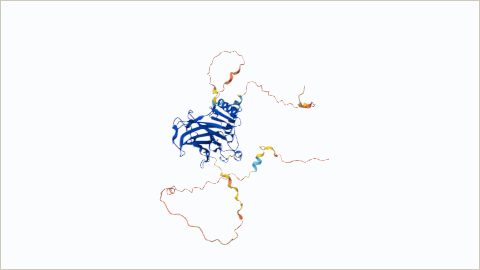
Open any AlphaFold structure in your browser, coloured honestly by confidence.
with the Sketcher · The model is a drawing, coloured by how sure AlphaFold is, part by part.
One protein, one question. Every free, in-browser tool — filter by who you are, what kind, and status.
The crafts are ways of knowing, shown as craftspeople. They are never protein faces: the craftspeople do the work, and the proteins only get bumped about.
See any protein.
Open any AlphaFold structure in your browser, coloured honestly by confidence.
with the Sketcher · The model is a drawing, coloured by how sure AlphaFold is, part by part.
How close is the prediction to experiment?
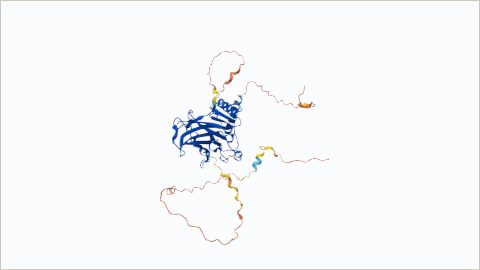
Superpose an experimental structure and AlphaFold's prediction client-side for an honest RMSD diff.
with the Photographer · A measured structure is laid over AlphaFold's drawing, so you see where the two differ.
Where could a drug bind?
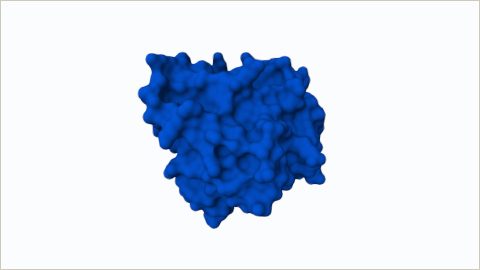
A geometric binding-pocket finder — cavities ranked by a transparent heuristic. Geometry, not a druggability predictor.
with the Doubter · A hollow in a shape is a guess at a pocket, not proof that anything binds there.
Where do two chains touch?
Find the epitope/paratope interface of a complex from geometry. A geometric contact map, not an experimentally-mapped epitope.
with the Photographer · You read where two measured chains touch in a real experimental structure.
What does this mutation change?
A phenotype → causal-gene → protein-structure explorer over well-established monogenic conditions. Not a predictor or diagnostic.
with the Tailor · One changed letter in a gene, and where it lands on the protein.
How much does one protein change across life?
One protein across a ladder of organisms, compared with ours letter by letter and by predicted shape. Every entry is looked up, never typed. Not a phylogeny.
with the Tailor · The same protein in many organisms, compared letter by letter.
What does a real protein look like?
The same AlphaFold content in a Grade 5–7 voice, NGSS-aligned and COPPA-safe by design.
with the Sketcher · Every picture is the computer's drawing, with how sure it is.
Can you sort every amino acid?
A COPPA-safe amino-acid sorting game. No accounts, no outbound links, nothing collected.
with the Weaver · Sorting the building blocks: oily ones end up hidden inside a fold.
How is a cell built?
Guided, textbook-sourced tours of eight cell types. A small, curated starter set.
with the Archivist · Each tour stop says where it was written down and seen.
Mechanism or purpose?
Call each protein claim mechanism or purpose, with no clock — spot teleology and rewrite it as honest physics.
with the Jostler · You catch sentences that give a molecule a plan, and make them honest.
What gets through the pore?
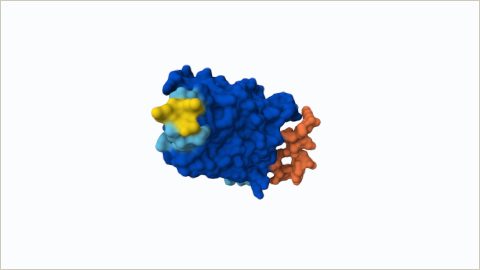
Predict which particles pass real channels (aquaporin-1, GLUT4, CFTR), then see the live AlphaFold structure. A pore is not a wall with a doorman.
with the Jostler · Particles bump at a channel; size and charge set which get through.
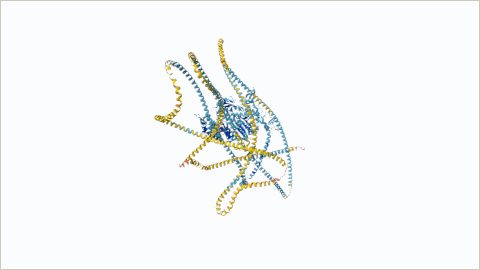
How does a motor really move?
Set the ATP level, predict the drift, and watch a jostled motor — a biased random walk, not a purposeful walk.
with the Jostler · A motor that only drifts because it is bumped, with a ratchet.
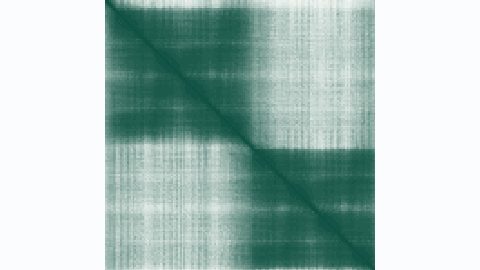
Do you trust where the domains sit?
A model can be crisp everywhere and still be unsure how its domains are arranged. Judge the arrangement, then read the real PAE.
with the Doubter · Crisp parts, and still a question: how sure is their arrangement?
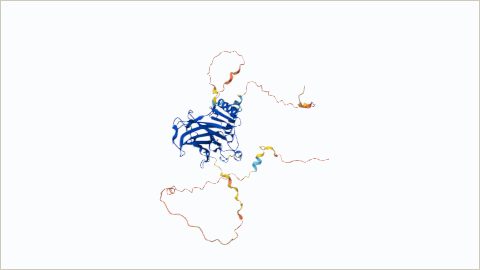
Is that floppy bit broken or working?
Low-confidence regions are usually intrinsically disordered — and doing a job. Tag each region, then see the live UniProt annotation.
with the Sketcher · A faint part of the drawing is often a floppy part that still has a job.
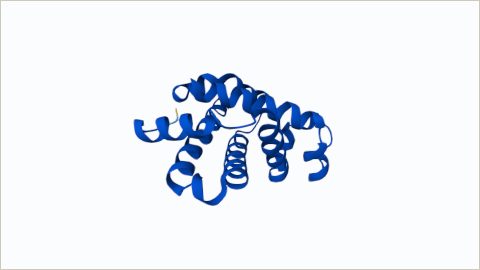
Does one changed letter matter?
Most changed amino acids change little; a few change everything. Draw a real variant, call its effect, and learn to calibrate.
with the Tailor · One changed stitch at a time: most change little, a few change a lot.
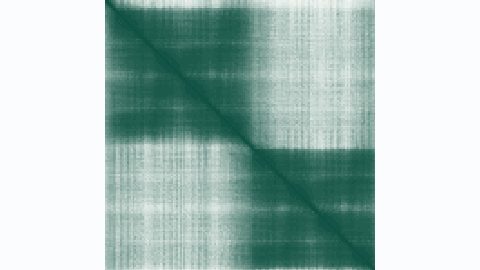
Firm or fuzzy — where do the domains sit?
The gentle companion to HingeHunt: two crisp domains can still have a fuzzy relative place. Paint your prior, then reveal the PAE.
with the Doubter · Two crisp domains, and a fair question about where they sit.
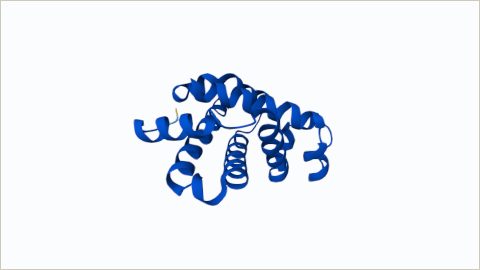
What does the model leave out?
A single-chain model is a starting point, not the whole machine. Spot the missing cofactor or partner, checked against live UniProt.
with the Doubter · What a single-chain model leaves out, and the evidence that it is missing.
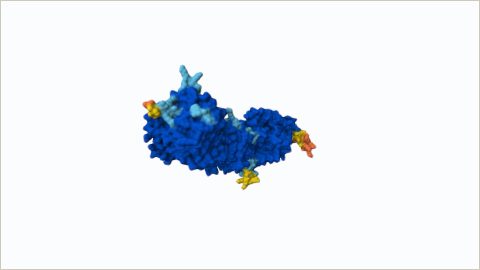
Rigid keyhole, or does it reshape?
Binding pockets are rarely rigid keyholes — many reshape on contact (induced fit). Predict rigid vs reshapes for real enzymes.
with the Glover · Many pockets reshape on contact, like a glove round a hand.
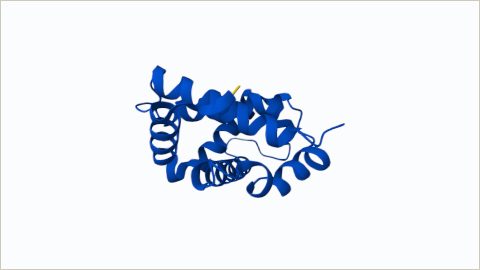
Does one O₂ fill all four at once?
One O₂ does not flip hemoglobin all-or-none. Set the cooperativity between hemoglobin's four subunits and match the real oxygen curve.
with the Rowers · Four subunits, where one binding makes the next one easier.
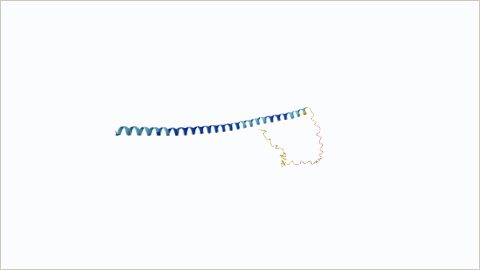
Can you read a protein with your ears?
An accessibility-first listening game: AlphaFold confidence played along the chain as pitch. Match the sound to the protein — and learn that low confidence is not the same as unimportant.
with the Listener · AlphaFold's confidence played along the chain as pitch.
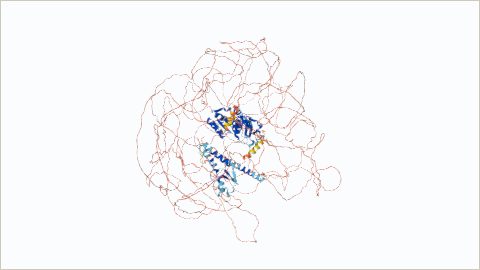
What survives when you only trust what the model is sure of?
Drag AlphaFold's confidence lens and watch a protein fade. Predict where each region vanishes — and learn that a faded region is usually flexible and functional, not a mistake.
with the Sketcher · Fade the drawing by confidence and see which parts go first.
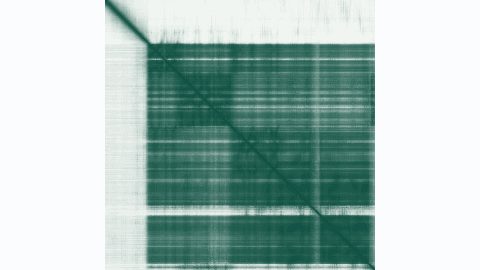
Can you carve a chain into its domains — and trust how they sit?
Carve a protein into its folded domains, then use AlphaFold's PAE to judge how much to trust where those domains sit relative to each other.
with the Doubter · Cut a protein into domains, then ask how much to trust where they sit.
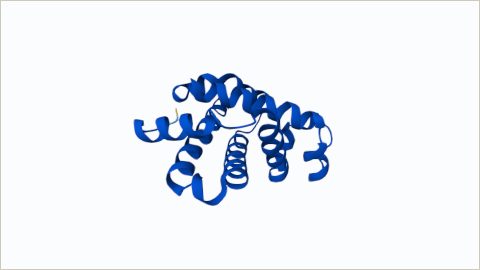
Which mutations actually matter?
Paint which parts of a protein tolerate change, then reveal the real AlphaMissense heatmap. Some proteins shrug off most changes; others are sensitive almost everywhere.
with the Tailor · Which stitches can change without much effect, checked against AlphaMissense.
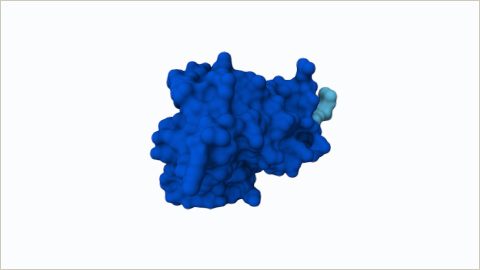
Which face does a protein hide against its partner?
See one subunit, bet which parts get buried against its partner, then load the real assembly and score your guess against the true interface. Many proteins don't work alone.
with the Weaver · Which parts end up hidden against a partner when the pieces come together.
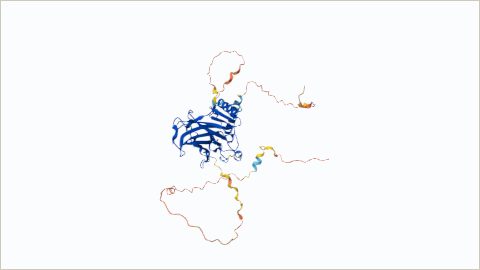
Where should a protein be drawn sketchy?
You are the renderer: choose which parts of a protein to draw in firm ink and which to draw sketchy. Sketchy is not wrong — it is how you honestly draw a flexible, functional region.
with the Sketcher · You draw the parts: firm ink where the model is sure, pencil where it is not.
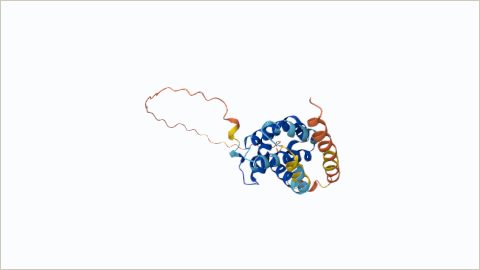
How does one gene make different proteins?
Compare two spliced isoforms of one gene and pick the exon that explains the difference. Splicing makes different chains — not one chain morphing into several shapes.
with the Editor · Two cuts of one gene's message, and the piece that makes them differ.
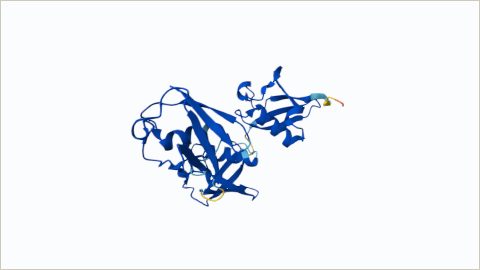
Is a protein really a solid ball of marbles?
A space-filling model looks like a solid pile of marbles, but atoms jiggle — and some parts smear more than others. Bet which regions hold still and which move.
with the Jostler · Atoms jiggle; some parts smear more than others.
Where should I start, and what comes next?
A suggested learning ladder of nineteen rungs, from a cell and its parts up to why prediction is trustworthy, with a start point for each age band. Each rung links to a free tool; the arrows show what makes the next step easier.
with the Doubter · A ladder that ends with: why trust a prediction, and how far?
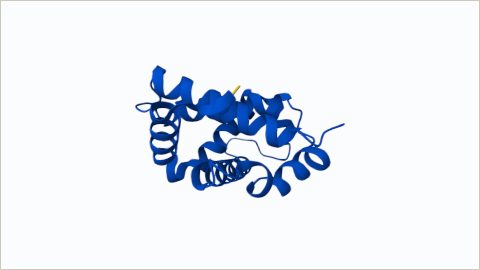
What do AlphaFold's real confidence numbers say?
Read the real confidence numbers off human haemoglobin: guess how sure the model is for a region, then see its actual per-residue pLDDT and pairwise PAE — computed live from the model — and learn to say it plainly: a prediction, not an experiment.
with the Sketcher · Read the confidence numbers behind the drawing.
Which structures won the Nobel?
The structural-biology Nobel Prizes as one narrative timeline, feeding the Viewer and a collection.
with the Archivist · Who saw which structure first, and when.
How good has structure prediction become?
An honest, dated scoreboard of every CASP experiment (1994→2024) built from real published results.
with the Referee · Every score comes from a blind test against structures nobody had seen.
Where is AI reaching the clinic?
A sourced, dated tracker of AI-in-clinical-trials milestones, with a strict no-causation posture.
with the Doubter · Each milestone is dated, and none is claimed as proof that AI caused it.
Where is the money moving?
Public AI-biotech capital flows, every figure cited to a primary source, with an honest coverage gauge.
with the Archivist · Every figure is dated and traced to where it was published.
How do closed-loop labs discover molecules?
Landmark closed-loop discovery runs, each cited to its primary paper. A small, curated starter set.
with the Archivist · Each run is kept with the paper that reported it.
What does the research say?
A reader over the Fold Commons research archive — search and read deep reports on AlphaFold and AI for biology.
with the Archivist · The reports are kept, dated and searchable.
No tools match those filters.